

-
How do implant dentures work?
Implant dentures are full dentures that clip onto dental implants instead of resting loosely on your gums.
First, a small number of titanium implants are placed in your jawbone. In the lower jaw, two implants are often enough to hold a denture firmly. The upper jaw has softer bone, so it usually needs four or more. Over the next few months, the implants bond with your bone and become a solid anchor.
Your new denture is then made with attachments built into the underside. These click onto matching fittings on the implants, either individual clips or a slim bar joining the implants together. The denture stays put when you eat, talk and laugh, but you can still unclip it each day to clean it and the implants underneath.
-
Is it painful having implant dentures fitted?
The implants are placed under local anaesthetic, so you won’t feel pain during the procedure, just some pressure. If you’re nervous, we can talk through sedation options to help you relax.
Afterwards, expect some swelling, tenderness and possibly bruising for a few days. It usually peaks around day two or three. Over-the-counter painkillers and a cold pack on the cheek normally keep things comfortable. Stick to soft foods and rinse gently with warm salt water.
While the implants heal, you’ll usually keep wearing your existing denture. We’ll adjust and soften its fitting surface so it doesn’t press on the healing areas.
Once your implant denture is fitted, most people find it far more comfortable than the denture they had before. Because it’s held by the implants, it doesn’t rock and rub on your gums, which is where most sore spots come from. Your cheeks and tongue take a week or two to get used to the new shape, and clipping it in and out quickly becomes second nature. We’ll see you after the fit to check everything and make any small adjustments.
-
How long does it take to have implant dentures fitted?
From your first consultation to your finished denture usually takes around four to nine months. Most of that is healing time, not appointments.
Here’s how it breaks down:
- Consultation and CBCT scan. Paul or Vish checks your bone and plans where each implant will go.
- Implant placement. The implants are placed in one appointment under local anaesthetic.
- Healing. Over three to six months the implants bond with your jawbone. You’ll wear your existing denture, adjusted for comfort, during this time.
- Impressions. Once you’ve healed, the attachments are fitted to the implants and we take impressions for your new denture.
- Making your denture. This takes around two to three weeks, usually with a try-in visit so you can see and approve the teeth before it’s finished.
- Fitting. Your denture is clipped into place and adjusted until it feels right.
Treatment takes longer if teeth need removing first or you need a bone graft. You’ll get a personal timeline, along with your costs, at your consultation.
-
How long will my implant dentures last?
The implants are designed as a long-term foundation, and when they’re well looked after, they can last for decades.
The denture that clips onto them has a shorter life, and that’s normal. The acrylic teeth wear down with chewing, and your gums change gradually over the years. Most implant dentures need relining every few years and replacing after around five to ten years. When that time comes, a new denture is made to fit the same implants, with no further surgery.
The clips inside the denture are small parts that wear with daily use. As they loosen, the denture starts to feel less secure. Swapping them is a quick job at a routine appointment and restores that firm fit.
To keep everything lasting as long as possible:
- take the denture out every day and clean both it and the implants
- see our hygienist regularly, since gum inflammation around implants is the main cause of problems
- keep up with check-ups so we can check the clips and the fit
- avoid smoking
-
Do implant dentures look like natural teeth?
Yes. Your denture is made to suit your face, not taken off a shelf.
When planning it, we look at the shape of your face, the fullness of your lips, your skin tone and the kind of smile you want. The teeth are chosen for shade, size and shape, and the pink gum section is tinted to look like natural gum.
You’ll usually have a try-in stage, where you see the teeth set up in wax before the denture is finished. That’s your chance to tell us if you’d like anything changed.
Implant dentures also help your face keep its shape. When all your teeth are gone, the jawbone slowly shrinks, which can make the lips and lower face look sunken. The implants help preserve the bone they sit in, and a well-fitted denture gives your lips and cheeks proper support.
Because the denture is held securely, there’s no visible slipping when you talk or smile, which is often what gives a traditional denture away.
-
How do implant dentures differ from traditional dentures?
A traditional denture rests on your gums and relies on suction, the shape of your mouth and often adhesive to stay in. An implant denture clips onto implants in your jawbone.
You notice that difference every day:
- Stability. Implant dentures don’t lift or slip when you eat, talk or laugh, so foods like apples and crusty bread are back on the menu.
- Comfort. Less movement means much less rubbing and fewer sore spots.
- No adhesive. The implants do the holding.
- Bone health. A traditional denture does nothing to stop the jawbone from shrinking, which is why they get looser over time. Implants help preserve the bone they sit in.
- Taste. Depending on how many implants you have, an upper implant denture can sometimes be made without covering the roof of your mouth.
The lower jaw is where people usually notice the biggest change, as traditional lower dentures are the hardest to keep in place. A lower denture held on two implants has been recognised as the standard of care for people with no lower teeth for over twenty years.
Implant dentures do involve minor surgery, a longer treatment time and a higher cost than a conventional denture. Paul or Vish will talk you through both options honestly so you can decide what’s right for you.
Implant Dentures
Book Online
Rediscover your smile with implant dentures
Imagine laughing freely without having to worry about covering your mouth. For many tooth loss patients, implant dentures can make this a reality. Unlike traditional dentures that sit on your gums, implant dentures are securely anchored to your jawbone, offering a solution that looks, feels, and functions just like natural teeth.
Many patients worry about having implant dentures fitted, but our All in 4 denture system has made it more comfortable and efficient than ever. The investment in implant dentures is an investment in your quality of life, self-esteem, and overall health.
- Stable dentures with no embarrassing slips
- Comfortable fit
- Bone preservation
- Helps maintain facial structure
- Clearer more natural speech
- Chew with ease
Patient journey
1. Your consultation
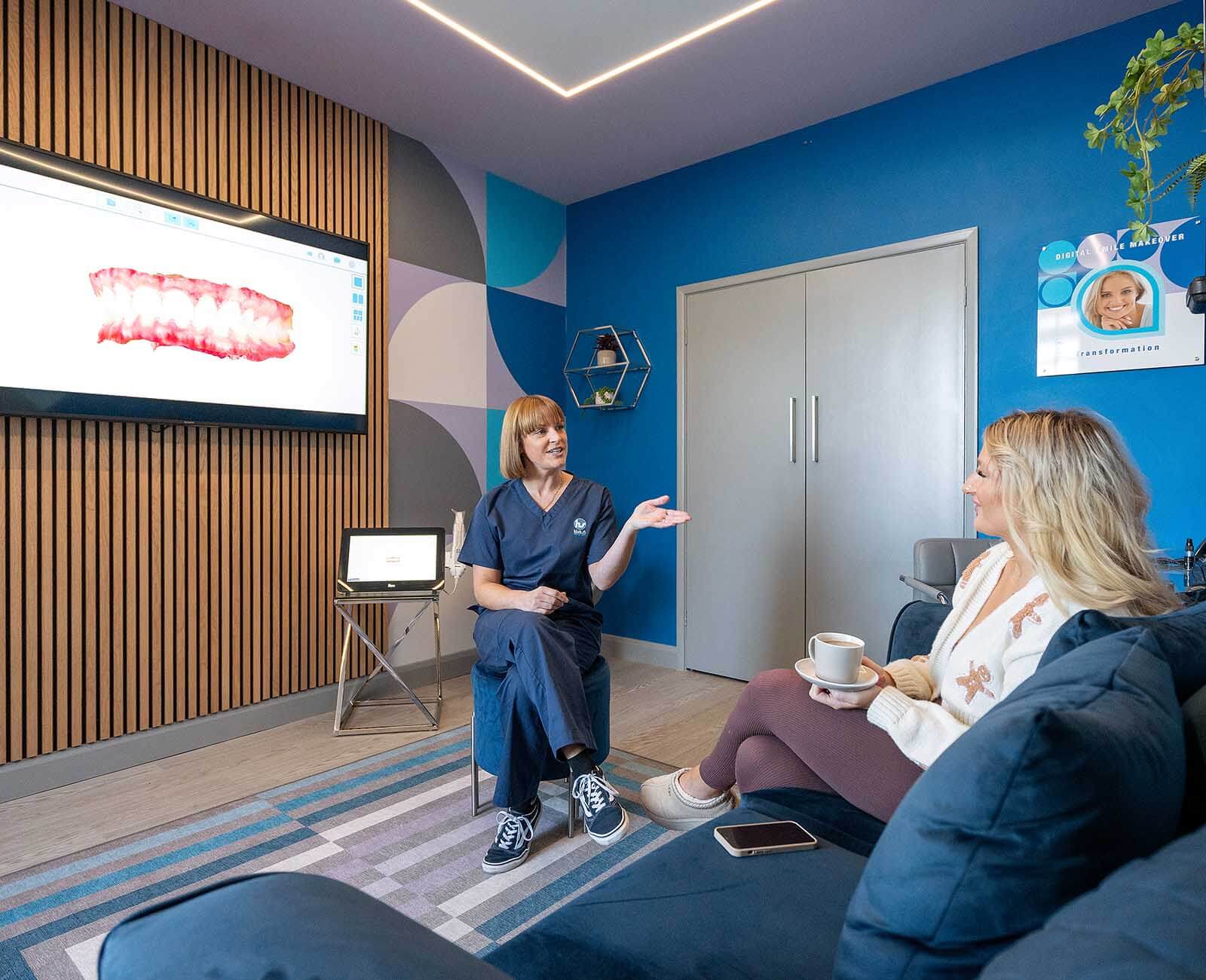
Using advanced imaging technology, Paul or Vish will assess your bone structure and create a personalised treatment plan.
Patient journey
2. Your treatment
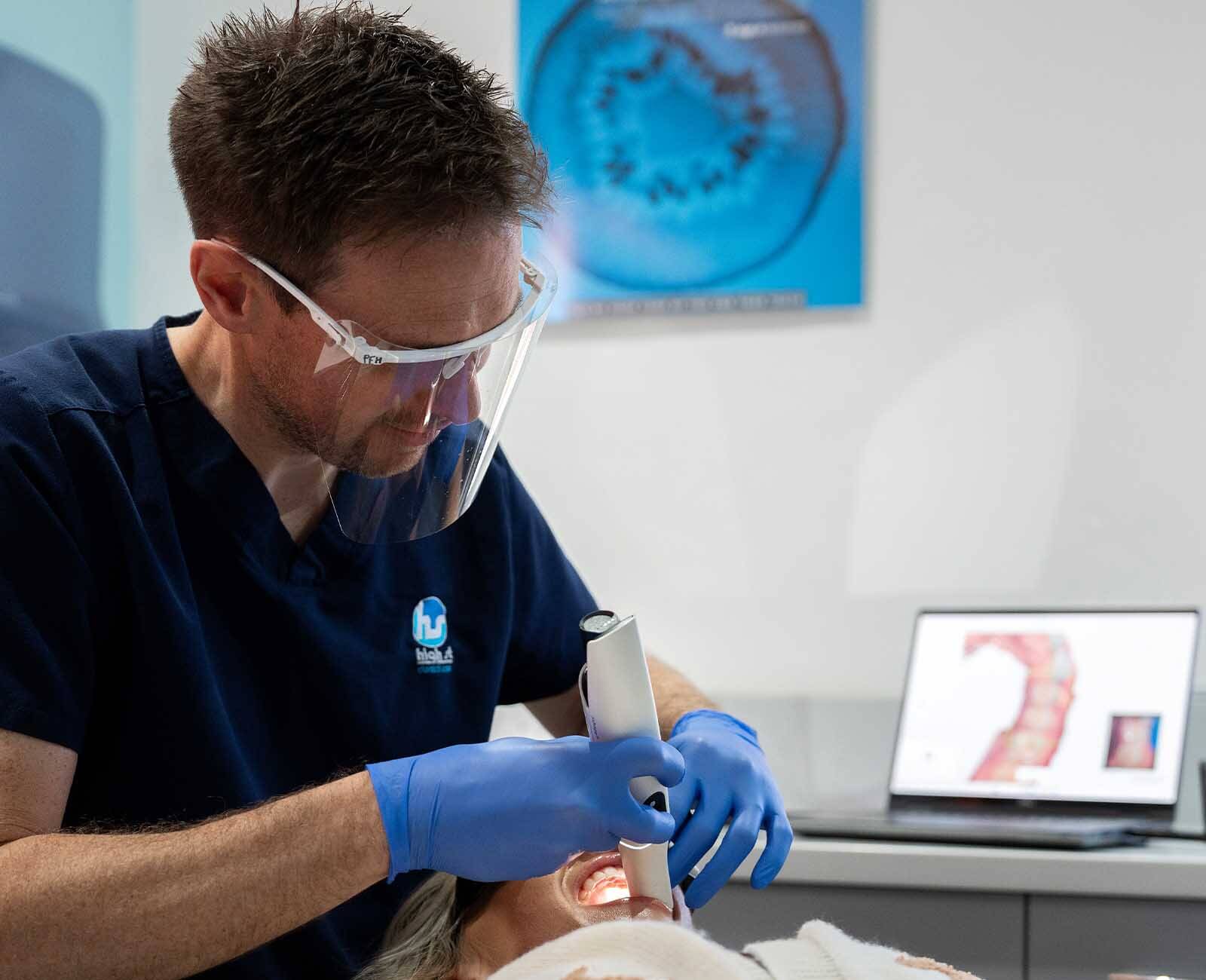
Paul or Vish will surgically place titanium posts into your jawbone. These will act as artificial tooth roots. Once healed, your custom-made dentures will be securely attached.
Patient journey
3. Aftercare
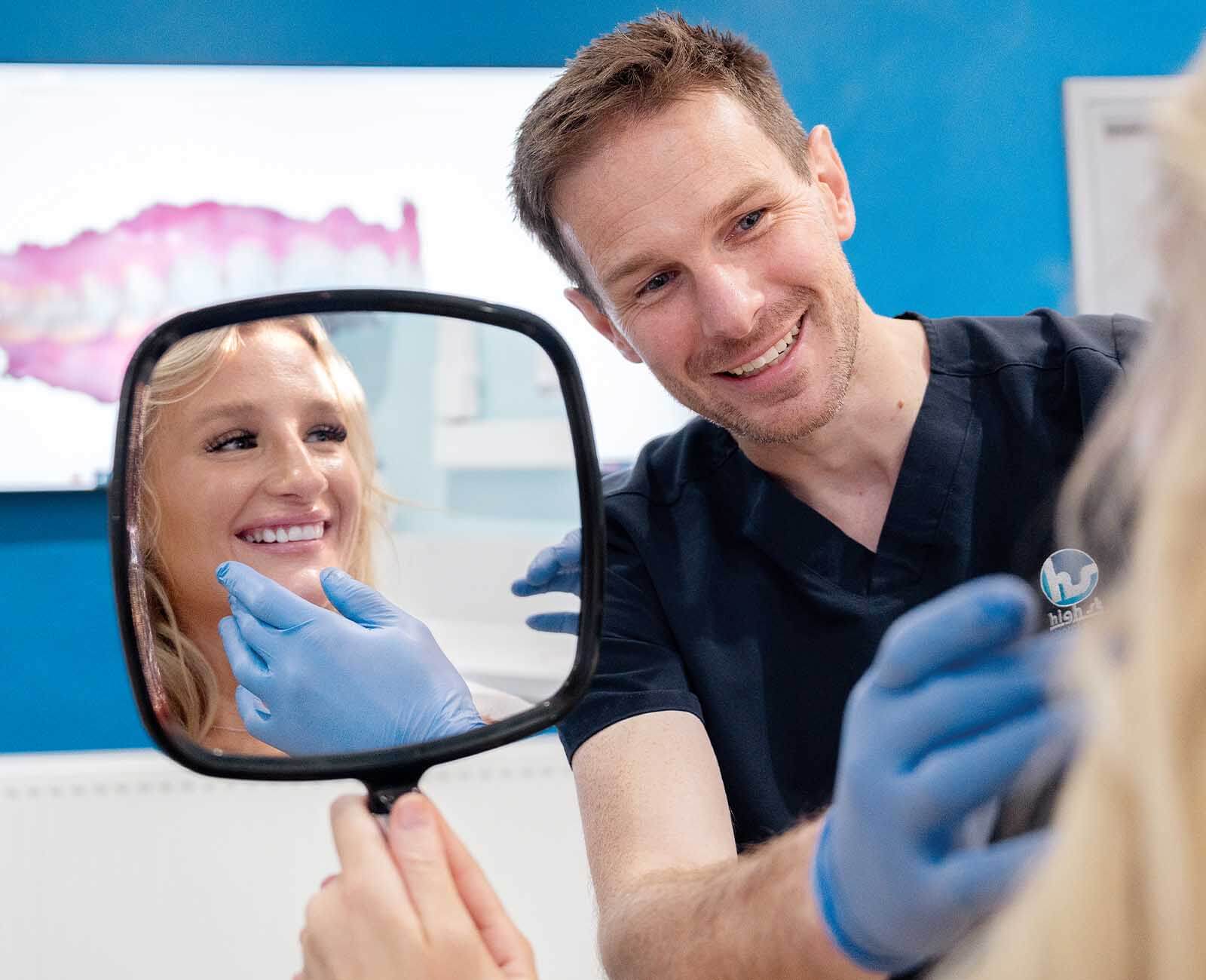
Gently rinse your mouth with warm salt water to reduce swelling and promote healing. Stick to soft foods for the first few days, then gradually introducing firmer textures.
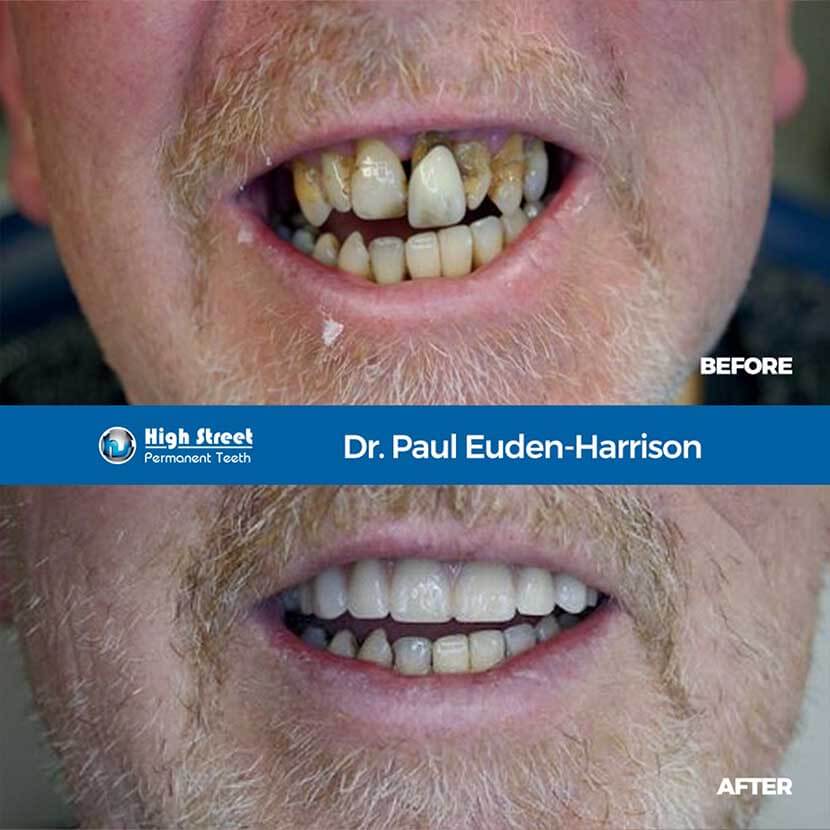
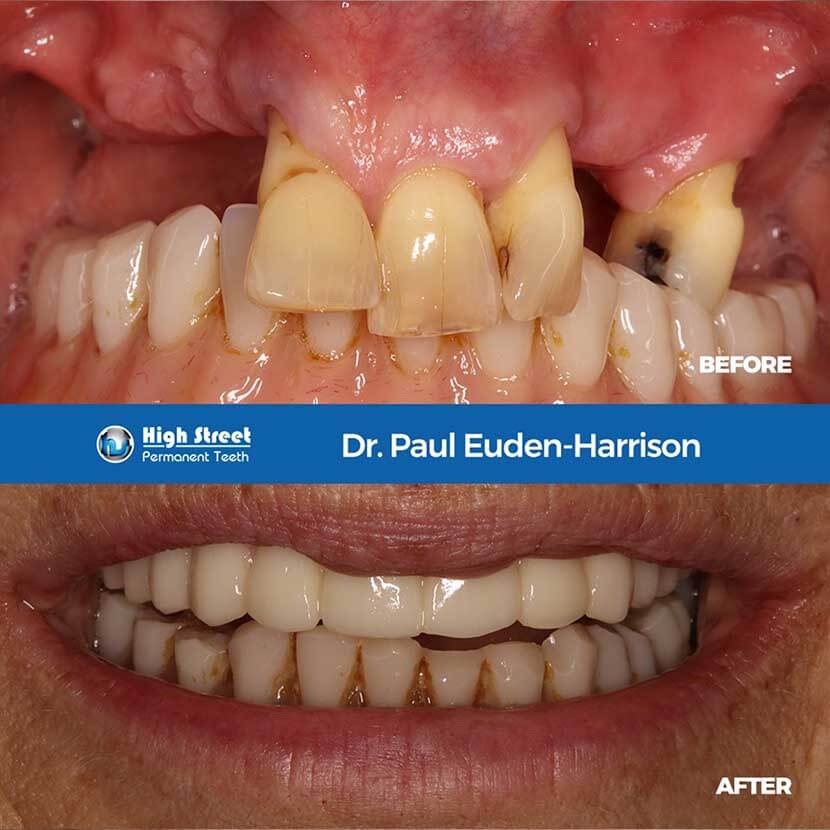
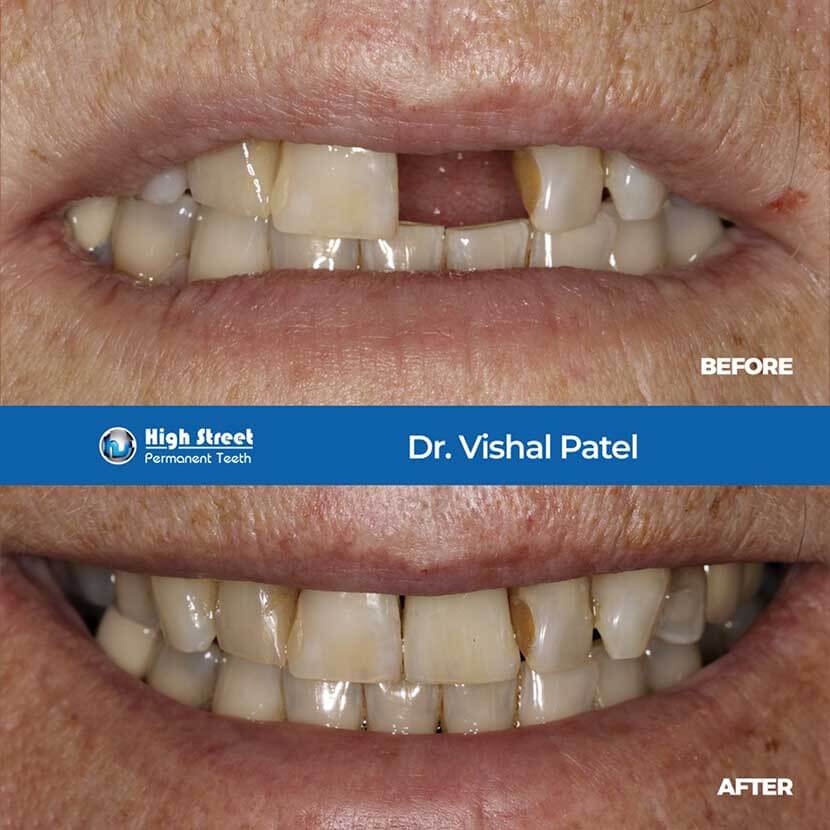
Real results
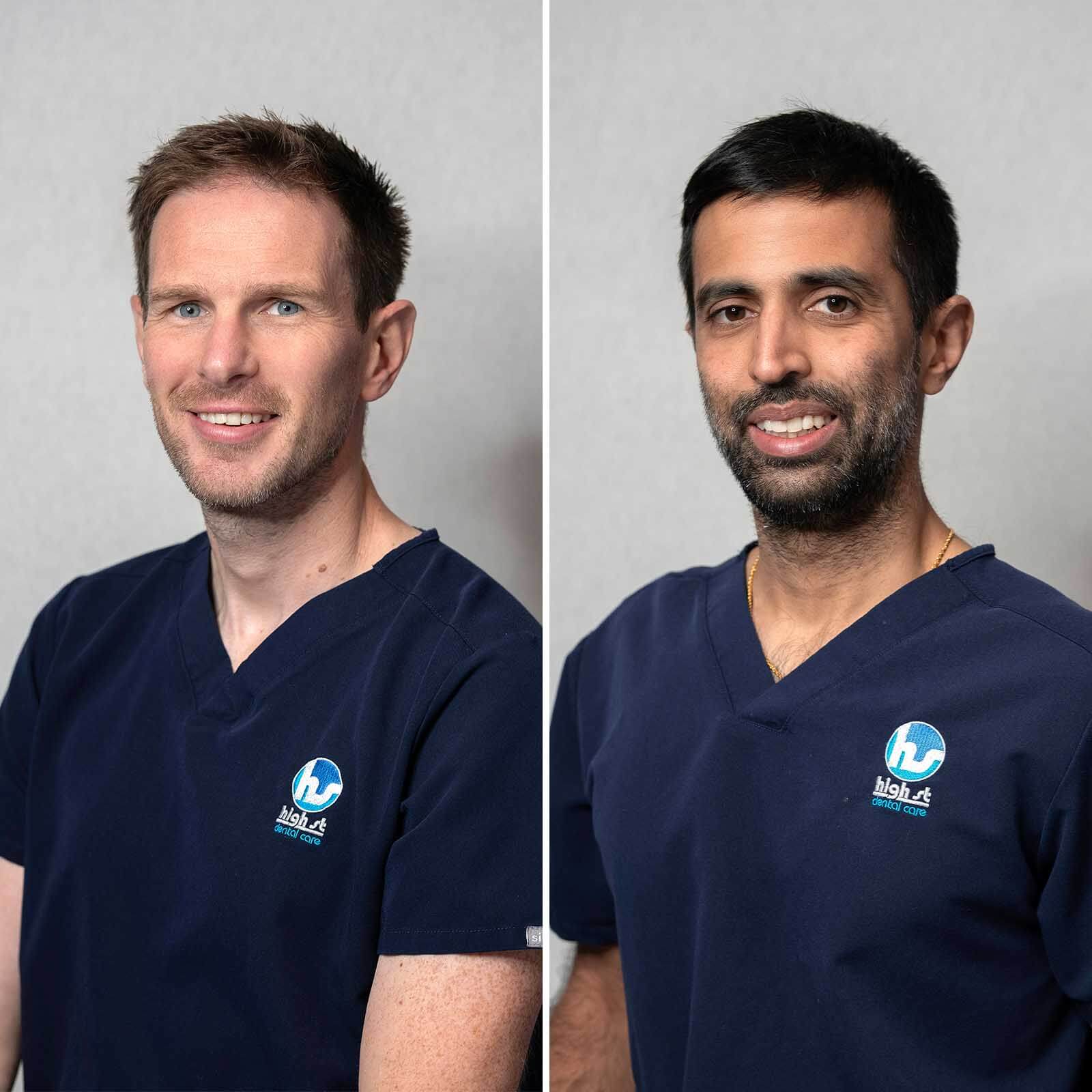
Meet Paul & Vish
Your implant dentist Paul, graduated from the University of Manchester in 2005. Originally from the East Midlands, he spent several years working on the south coast before moving back to be near family. In 2009, Paul completed a Certificate in Implantology from the London Eastman Dental Institute. Paul is very passionate about placing implants and has extensive experience in a wide range of procedures, from replacing single teeth to whole mouth makeovers. Paul and the implant team aim to do their very best using all the latest technology to achieve the best possible results. Paul also has many years of experience in all aspects of dentistry as well as Invisalign and cosmetic treatments.
Your Implant dentist, Vish, qualified with Honours and Distinction in 2006 from Sheffield Dental School. His passion for oral surgery led him to various hospital posts, including being an Honorary Clinical Fellow at Sheffield Dental Hospital. In 2011 he embarked on an 18-month Dental Implant Certificate course at the Charles Clifford Dental Hospital Sheffield, and has been placing dental implants since then. Vish is very passionate about his implant treatment of patients and together, with his implant team, uses the latest technology to achieve great results. Vish also has extensive experience in Cosmetic Dentistry and Invisalign. It is this combination of different disciplines that allows him to treat more challenging cases.
Implant Dentures FAQs

“Kindness & support!”
“I have just completed excellent implant treatment with Dr Paul Harrison. As an extremely nervous patient I would like to reassure anyone considering having dental implants. Paul Harrison was gentle and so reassuring throughout each stage of my treatment. Thank you Paul Harrison. Thank you also to the nurses who’s kindness and support was greatly appreciated.”
– Mrs M