


-
What are the early signs that I need gum treatment?
The earliest and most common sign is bleeding when you brush or floss, along with gums that look red, puffy or swollen rather than firm and pink. You might also notice tenderness, bad breath, or gums that feel a little sore. At this early stage, the problem is usually gingivitis, which is inflammation of the gum caused by plaque building up along the gumline. The important and reassuring part is that gingivitis is reversible, so caught early it can usually be cleared up with a professional clean and some adjustments to your home cleaning routine, before it has a chance to develop into anything more serious.
-
What are the signs I may need advanced gum treatment?
Some signs point to gum disease that has progressed beyond the early stage into periodontitis, where the infection has started to affect the bone and tissues that hold your teeth in place. These include persistent bad breath or a bad taste, gums that are receding or pulling away from the teeth, teeth that feel loose or have started to drift, and gaps opening up between them. A gum abscess, which is a painful collection of pus in the gum, also needs prompt attention. If you notice any of these, it is worth being seen sooner rather than later, as more advanced cases may need deeper cleaning below the gumline and, occasionally, periodontal surgery. At our practice, these cases can be managed by our periodontist, Dr Muataz Osman, who specialises in treating gum and bone problems.
-
What treatments are available for gum disease?
Treatment depends on how far the gum disease has progressed, and it follows a step-by-step approach. The foundation for almost everyone is thorough professional cleaning combined with guidance on your daily oral hygiene, since keeping plaque under control at home is what makes any treatment last. For early gum disease, a scale and polish to remove plaque and tartar, along with better brushing and cleaning between the teeth, is often enough. Where the disease has reached below the gumline, the next step is a deeper clean of the root surfaces, known as root surface debridement or root planing. Addressing risk factors matters too, such as stopping smoking and, for people with diabetes, keeping it well controlled.
-
What is root planing?
Root planing, also called root surface debridement, is a deep clean that goes below the gumline to remove plaque, tartar and bacteria from the surfaces of the tooth roots, which cannot be reached by ordinary brushing or a standard scale and polish. When gum disease has advanced, small pockets form between the gum and the tooth, and bacteria collect and multiply in them. Cleaning these root surfaces thoroughly helps the inflammation settle and gives the gum a chance to tighten back against the tooth. A local anaesthetic is often used to keep you comfortable, since the cleaning reaches below the gum, and the treatment may be carried out over more than one appointment depending on how many areas need attention.
-
How long does gum treatment take?
It varies a good deal depending on how advanced the gum disease is. Early gingivitis often improves within a few weeks of a professional clean and better home care, and may only need one or two visits. More advanced periodontitis usually takes longer, with root surface debridement sometimes spread across several appointments, followed by a review to check how the gums have responded. It is worth understanding that gum treatment is not a one-off fix but the start of ongoing care. Once things are stable, regular maintenance visits with the dentist or hygienist keep the disease in check, because the aim is to control it and protect your teeth for the long term rather than simply treat it once and move on.
-
Can gum disease return after treatment?
Yes, it can, and understanding why helps you stay ahead of it. This comes down to the difference between the two stages. Gingivitis, the early form, is fully reversible and can be cleared completely with good cleaning. Periodontitis, the more advanced form, is different: the bone and tissue lost around the teeth do not grow back, so rather than being cured, it is controlled and kept stable. That means once you have had periodontitis, you remain more prone to it, and it can flare up again if plaque is allowed to build back up. The good news is that it is very manageable. A consistent home routine of brushing and cleaning between the teeth, not smoking, and keeping up your maintenance appointments are what keep it under control and your teeth in place for years to come.
Gum
Treatment
Book Online

Healthier gums can seriously benefit your overall health
At High Street Dental Care (HSDC) our very skilled dental hygienists will provide you with the highest possible care for your gums. Having healthy gums is the foundation of not only a healthy confident smile but there is recent scientific evidence that there may be a causal link between periodontal disease and other illnesses such as Diabetes and Heart disease.
Healthy gums should be pink, firm and keep your teeth securely in place. Your gums should not bleed when you touch or brush them. Gum disease is not always painful, and you may be unaware you have it. This is why it is important to have regular dental checkups.
- Improve your oral hygiene
- Alleviate gum pain and discomfort
- Reduce the risk of tooth loss
- Lowers the risk of associated, more serious health conditions
- Boost your smile
- Banish bad breath

Patient journey
1. Your consultation
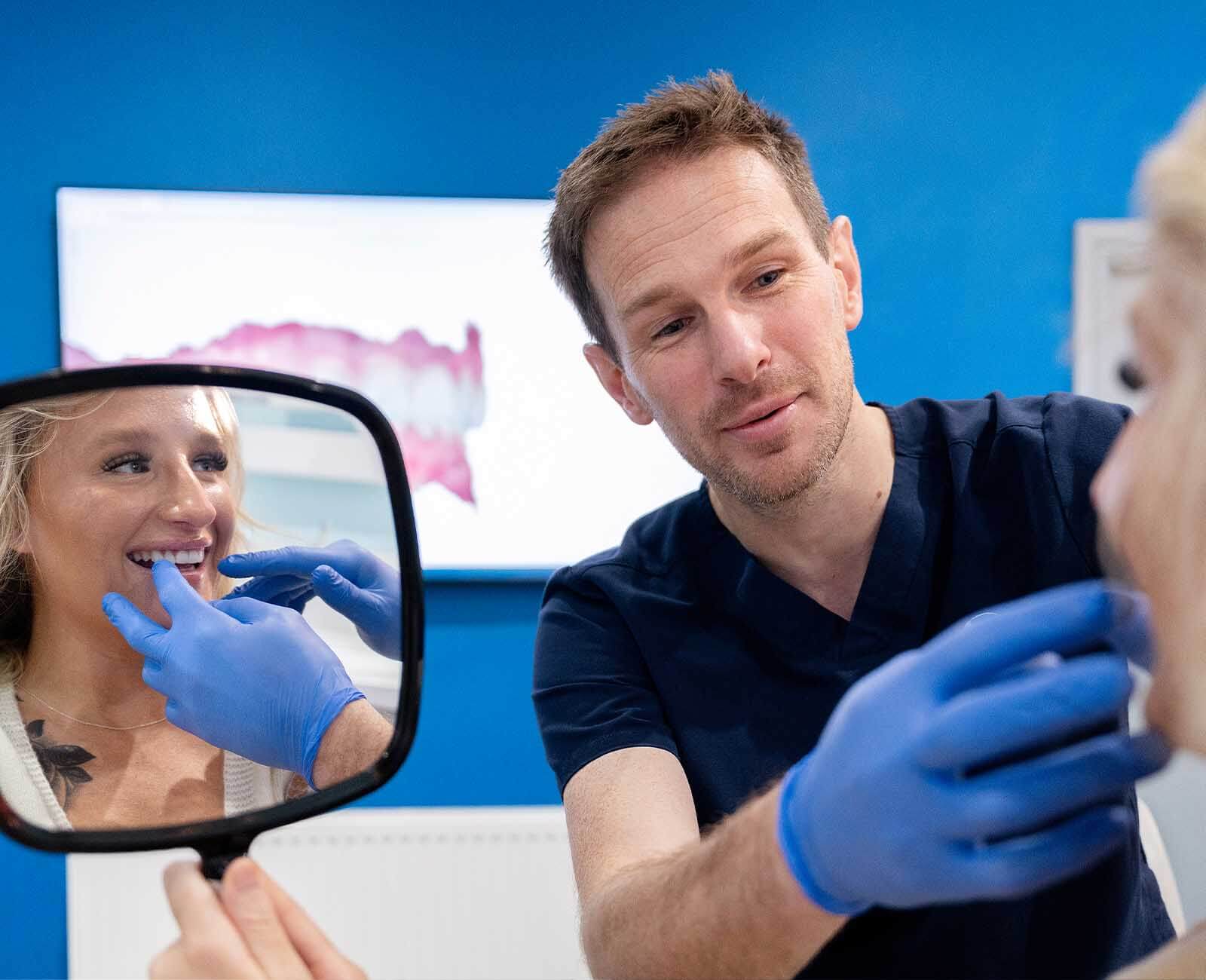
Your dentist will assess your gums and may take X-rays to evaluate bone loss. They’ll discuss your symptoms, medical history, and lifestyle factors that could impact your gum health. Based on their findings, they’ll explain your condition and propose a tailored treatment plan.
Patient journey
2. Your treatment
Scale and polish -This is carried out by the dentist or one of our team of dental hygienists. This involves the removal of plaque and tartar (hardened plaque) that can build up on your teeth. The hygienist will also take time to instruct you on a good personal oral hygiene regime.

Patient journey
3. Aftercare
Our dentist may ask that you avoid hot foods and drinks for 24 hours, and to rinse with warm salt water 2-3 times daily to reduce swelling and discomfort.
Meet Muataz
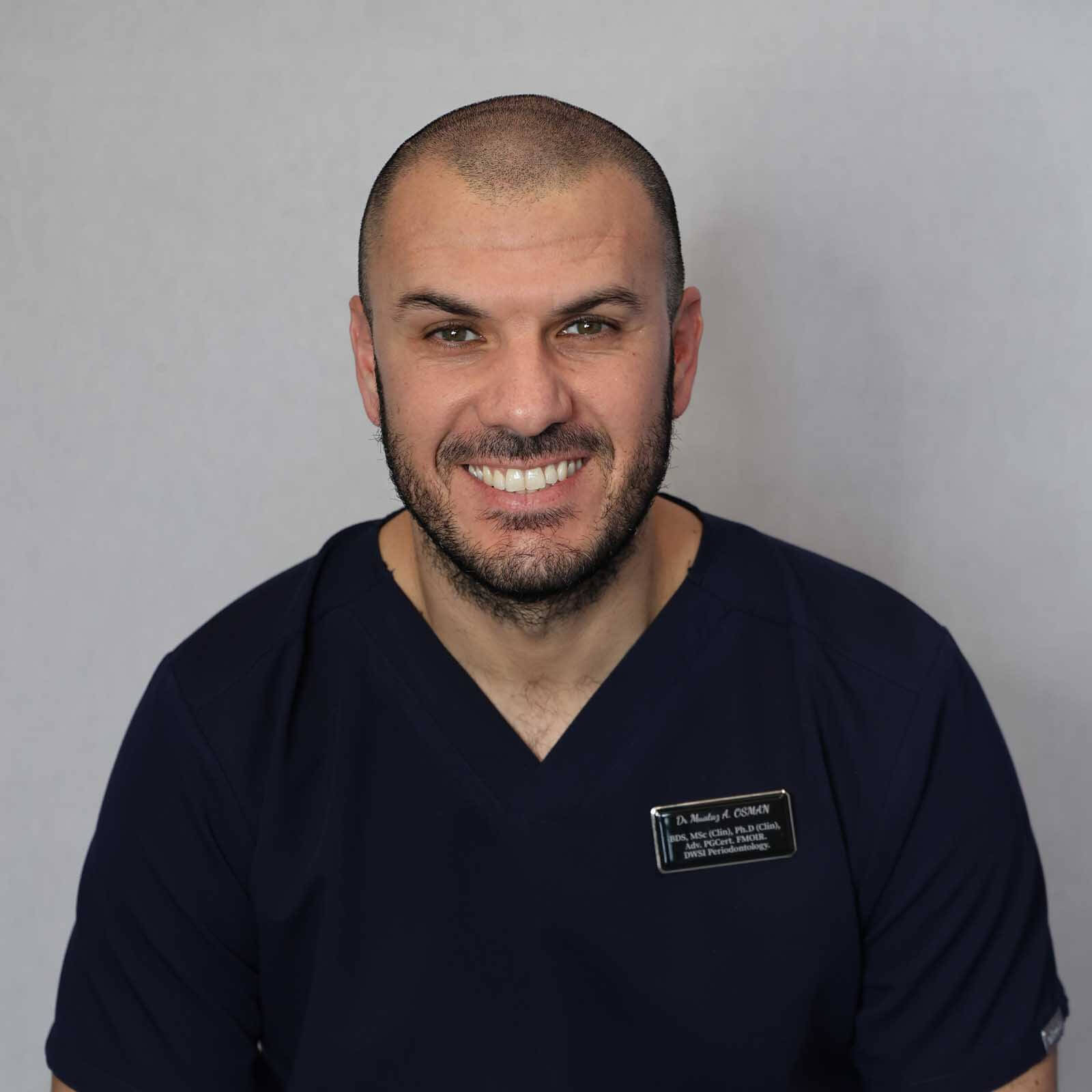
Dr Muataz Osman
BDS, MSc (Clin) Periodontology, PhD (Clin) Implantology.
Muataz graduated from the University of Benghazi in 2008. He worked as a GDP with special interest in periodontics and implant dentistry for 6 years in private practices. During that time he was a clinical and academic tutor in the restorative department at LIMU (2010-2012).
Between 2012-2014 he was a TA in the Oral Biology department at the University of Benghazi, from which he was granted a scholarship to get his PG education.
Dr Osman obtained his clinical Masters in Periodontics from the University of Manchester with distinction (2015-2018) – this grade qualified him for a place in a Clinical PhD studies in implant dentistry, which he finished with A2 grade in 2/2023.
Dr Osman was an honorary clinical tutor in the PG Periodontology program at the University of Manchester. Muataz is a clinical tutor and mentor at Tipton Training PG Dip. and Cert. in Implantology and Periodontics.
Gum Treatment FAQs

“Five stars!”
“Five stars for a world class dental practice! After years of having a general fear of the dentist High Street Dental care has changed my mindset on dentistry completely! Thank you so much to my dentist Pippa and hygienist Amy for being so patient with me and thank you to the nurses for all their support within the appointments as this doesn’t go unnoticed!”
– Georgia