


-
What is a CBCT scanner and how does it work?
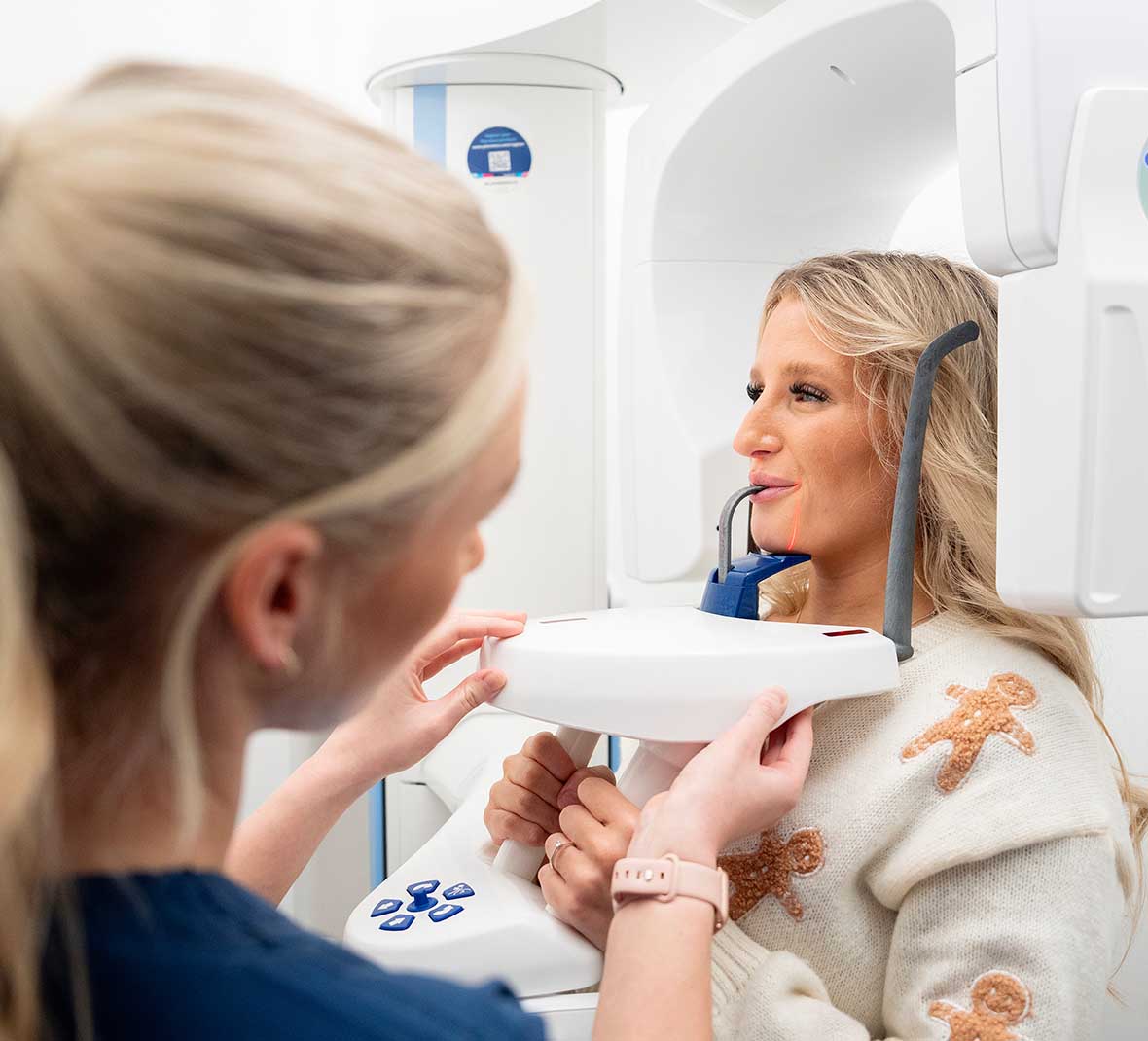
CBCT is a technique used to produce images for various medical purposes and this type of scanner is regularly used in dentistry and oral surgery. It produces high-quality 3D images in a high volume, removing the need for multiple x-rays.
-
What can a CBCT scanner provide information about?
It can tell us your dental and bone structures, your soft tissues and the paths of your nerves.
-
Will I need to remove any jewellery before a CBCT scanner appointment?
Yes. Please do not wear any metal items to the appointment, such as jewellery or hairpins.
-
How many scans will I need?
One appointment is required to collect all images. Our scanning technology saves you time. We collect everything we need in one appointment and you won’t need multiple x-rays.
-
How can a CBCT scanner improve your surgical techniques?
Our scanner can collect around 600 images, giving us more information.
-
How does a CBCT scanner help with the preparation of my procedure?
Your scans will show us detailed images of your teeth and gums. This additional knowledge will give us the ability to improve our surgical techniques. We can plan and evaluate your dental implant surgery ahead of your appointment and we’ll have access to cutting edge imagery to help us.
CBCT Scanner
Book Online
Precise planning for straighter teeth and your dental implant placement
At High St Dental Care, we make use of cone beam computed tomography (CBCT) scanning within our dental practice. A CBCT (cone beam computed tomography) scan is a 3D X-ray of your teeth, jaw, nerves and bone, taken in a single quick appointment. The scanner rotates once around your head and captures around 600 images. We use them to plan dental implants and complex orthodontic cases precisely before treatment starts, such as Invisalign. High St Dental Care is one of the few practices in Melton Mowbray with CBCT on site, so you don’t need to travel to a hospital or another clinic for your scan.
The scan is painless and needs no aftercare. You’ll just be asked to remove jewellery, hairpins and anything metal first. We also accept CBCT referrals from other dental practices.
- Gives us better insight into your oral structures
- Helps us plan your treatment more precisely
- More efficient than traditional X-rays
- Efficient and painless
- Clearer images for clarity of diagnosis
- Cutting edge scanning technology

Patient journey
1. Your consultation
When you visit us for an initial chat about Invisalign teeth straightening treatment, or replacing missing teeth, we’ll assess your suitability and then arrange your CBCT scan.
Patient journey
2. Your treatment
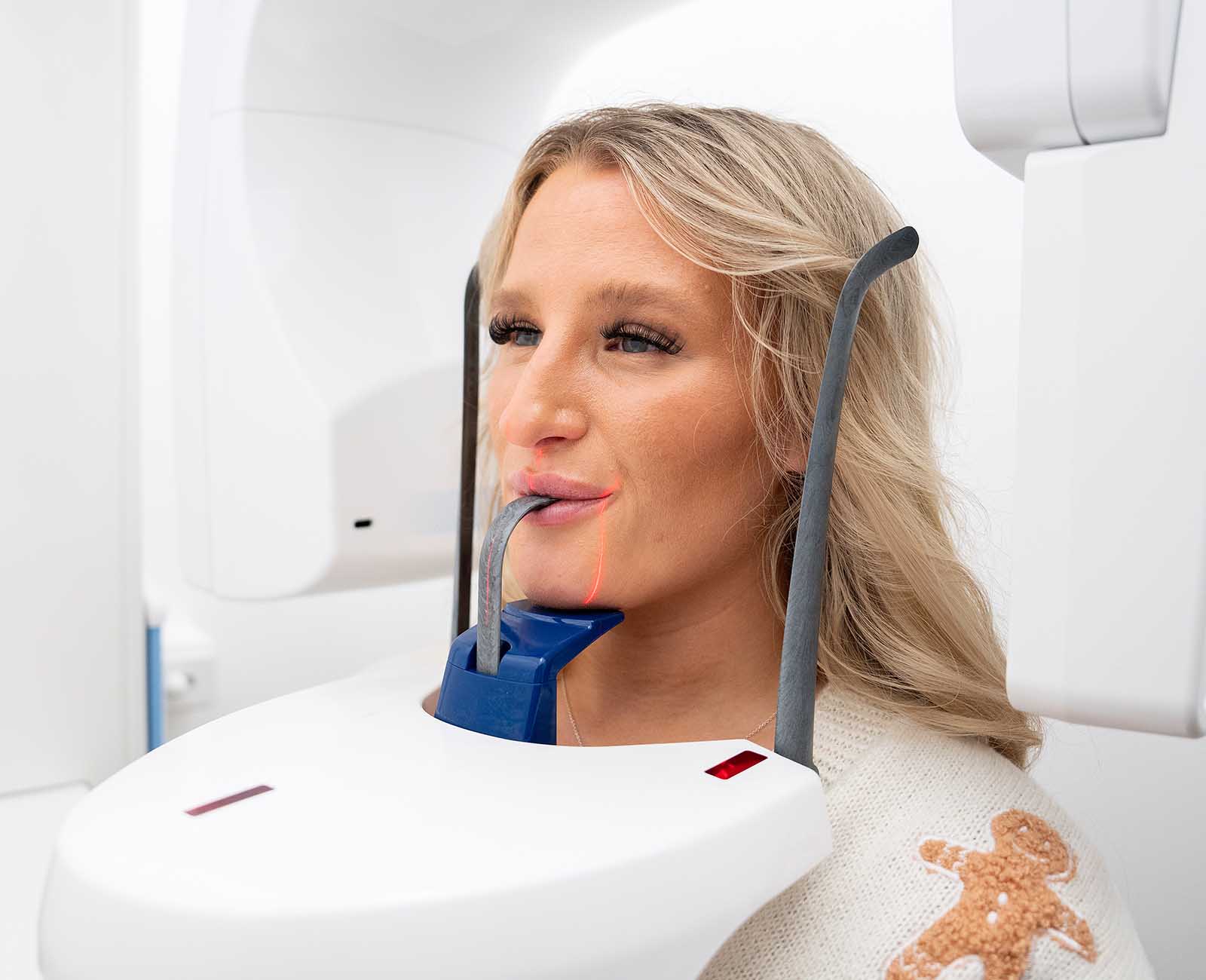
The CBCT scanner will be fixed into place depending on the images we need to obtain. It will rotate around your head, scanning and collecting the required images.
Patient journey
3. Aftercare
No aftercare is needed following a CBCT scan. It’s painless and non-invasive. It’s simply a tool to help us plan your treatment more efficiently.
CBCT Scanner FAQs

“100% recommend!”
“I cannot believe the results Invisalign has achieved. I now have straight teeth again and I couldn’t be happier with the results. After being really self conscious about showing my teeth to people, I now can’t stop showing people my smile! I would 100% recommend for anyone thinking about getting Invisalign to do it! And I couldn’t recommend high street dental care enough!”
– Sophia