



-
How are crowns fitted?
Fitting a crown usually takes two visits. At the first visit, your dentist numbs the tooth with local anaesthetic so you stay comfortable, then removes any decay and gently reshapes the tooth so the crown can fit over it like a cap. A digital scan captures the exact shape, which means no uncomfortable putty impressions, and that scan goes to a dental laboratory where your crown is made to match the colour and contour of your other teeth. You leave with a temporary crown protecting the tooth in the meantime. At the second visit, your dentist checks the fit and your bite, makes any small adjustments, and then bonds the permanent crown firmly in place. Once it has set, you can use the tooth as normal.
-
How do I know if I need a crown?
A crown is essentially a protective cap that covers the whole visible part of a tooth to restore its shape, strength and appearance. Your dentist may recommend one if a tooth has a cavity or old filling too large for the remaining tooth to support, if it is cracked, worn down or weakened, or after root canal treatment, when the tooth that is left can become brittle and needs protecting. Crowns are also used to cover a dental implant or to anchor a bridge.
-
Is it painful having a dental crown fitted?
For most people, it is not a painful procedure. The tooth and the area around it are numbed with local anaesthetic before any preparation begins, so during the appointment you are likely to feel some pressure and movement rather than pain. Afterwards, it is normal for the tooth to feel a little sensitive to hot and cold, or slightly tender for a few days, particularly while a temporary crown is in place, and this usually settles on its own.
-
How long is the crown preparation and fitting procedure?
The process begins with our dentist preparing your tooth, which involves removing any decay and shaping it to accommodate the crown. Next, they’ll take Digital scan of your tooth, which is needed to create a crown which is a perfect fit. While you wait for your permanent crown to be crafted (usually 2 weeks), a temporary crown is placed. During your second visit, the dentist will remove the temporary crown and carefully fit and adjust your new permanent crown.
-
Will I need to have my crown replaced at any point?
Most likely yes, eventually, since a crown is a hard-wearing restoration rather than a permanent one. How long yours lasts depends largely on the material and how it is looked after. As a rough guide, porcelain and ceramic crowns often last around 10 to 15 years, while tougher materials such as zirconia or gold can last 20 years or more. Habits that shorten a crown’s life include grinding your teeth, chewing ice or very hard foods, and using your teeth to open things. Changes in the tooth underneath matter too, as decay at the edge of the crown or receding gums can bring a replacement forward. Good brushing, flossing and regular check-ups are the single best way to get the most years out of it, and your dentist will keep an eye on it at every visit.
-
How do I look after my crown?
Caring for a crown is largely the same as caring for a natural tooth. Brush twice a day and clean between your teeth daily, paying attention to the margin where the crown meets the gum, since that edge is where decay can start if plaque builds up. The tooth under the crown can still decay, even though the crown itself cannot, so that daily cleaning genuinely matters. It is sensible to go easy on very hard or sticky foods that could chip or dislodge it, and to avoid using your teeth as tools. If you grind your teeth at night, ask us about a nightguard to protect both the crown and your natural teeth. Regular check-ups let us catch any wear or problems early, while they are still simple to put right.
Crowns
Book Online
Restore strength and beauty to your smile
Imagine restoring your smile to its former glory, with a solution that’s both functional and aesthetically pleasing. Dental crowns can breathe new life into damaged or weakened teeth. If you’re struggling with tooth loss or decay, these custom-made caps can give you your smile confidence back. They’ll also protect your vulnerable teeth from further damage.
Crafted from durable materials like porcelain or ceramic, dental crowns are designed to withstand the challenges of daily life, from enjoying your favourite foods to flashing your brightest smile. They’re particularly beneficial for teeth which have undergone root canal treatment, or those that are too fragile for traditional fillings.
- A smile to make you proud
- Improve your bite alignment
- More comfortable eating and speaking
- Long-lasting solution for damaged teeth
- Strengthen weak teeth
- Natural-looking tooth restoration
Patient journey
1. Your consultation
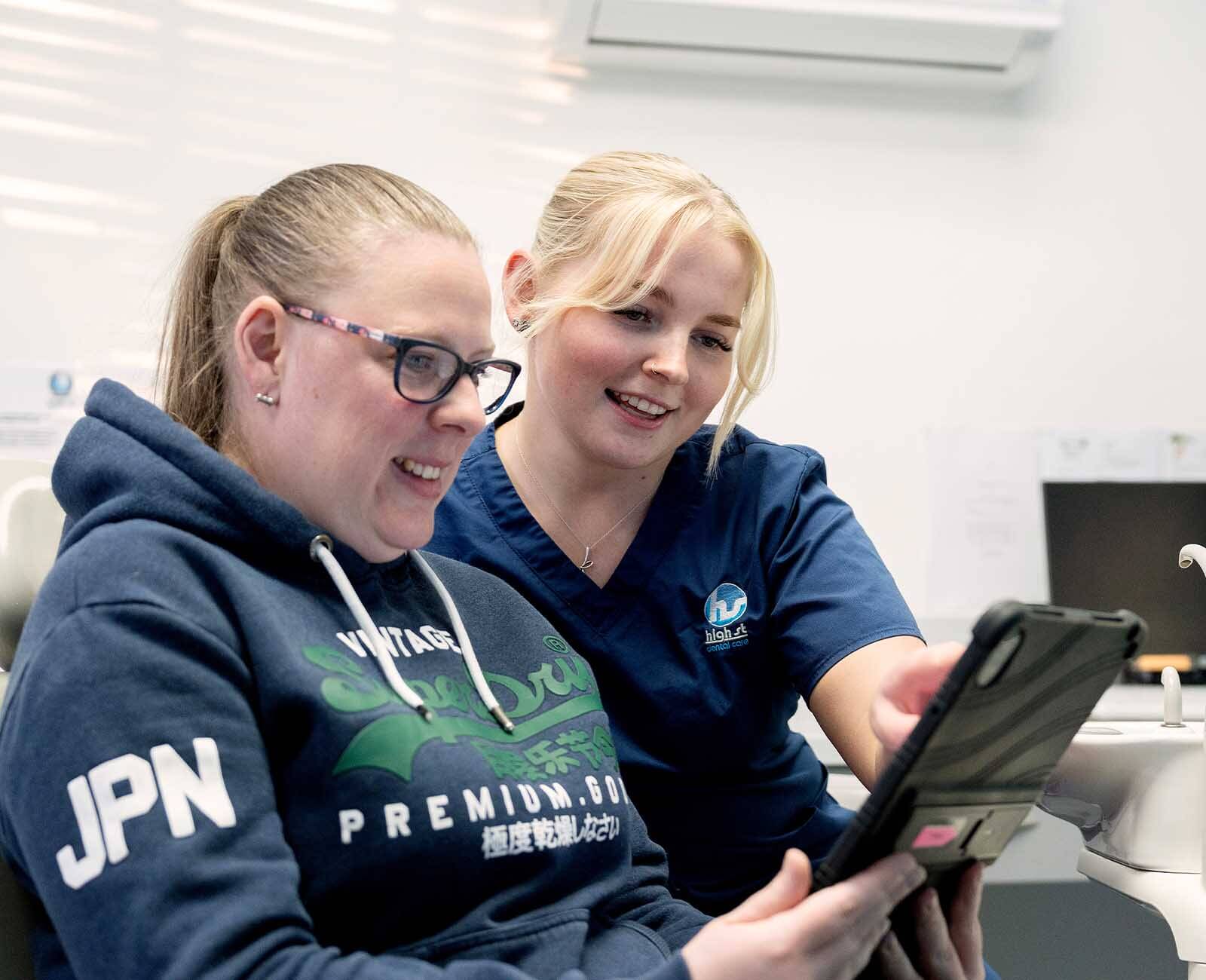
One of our team of experienced dentists will examine your tooth, take X-rays, and discuss your options. They’ll explain the crown procedure, the materials available, and answer all your questions, with a view to also assessing your suitability.
Patient journey
2. Your treatment
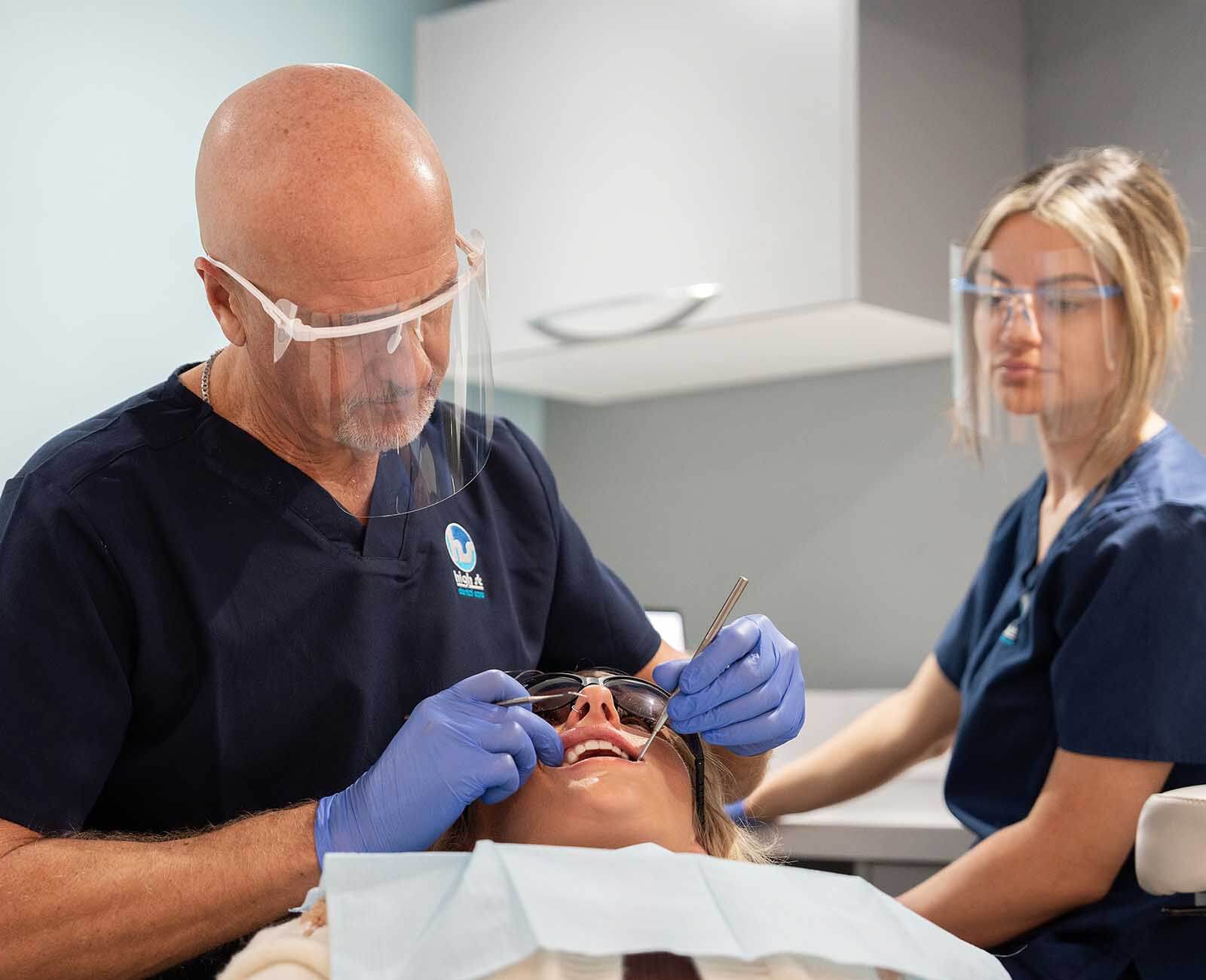
Firstly, your damaged tooth will be prepared to receive the crown, then precise digital scans will ensure a perfect fit. You’ll wear a temporary custom crown until your new crown is created and securely bonded.

Patient journey
3. Aftercare
Avoid sticky or hard foods for 24 hours and when you brush around the crown area, do it gently. Rinse with warm salt water to soothe any discomfort.
Crowns FAQs

“Thank you!”
“I can’t recommend Paul and High street Dental Care enough, thank you very much! ☺️”
– Thomas