Teeth Whitening: In-Chair vs At-Home
Contents
Get in touch with our expert team today. 01664 562 092.
Professional teeth whitening comes in two main forms, and the difference between them is more than just speed. Here’s what actually separates in-chair whitening from a dentist-provided take-home kit, and how to think about which suits a particular situation.
The Legal Bit Worth Knowing First
In the UK, teeth whitening is legally restricted to GDC-registered dental professionals. Over-the-counter products are capped at just 0.1% hydrogen peroxide, while dentists are permitted to use gels up to 6%, sixty times stronger. That gap explains most of why shop-bought strips rarely deliver a dramatic result, and why salon or unregulated whitening isn’t just less effective, it’s against the law in the UK outside a registered dental setting.
In-Chair Whitening
This is the fastest route to a visibly brighter smile. A professional-strength gel is applied directly to the teeth, often activated by an LED light, in a series of cycles typically lasting 15 to 20 minutes each across a single appointment of roughly 60 to 90 minutes. Results, often six to eight shades lighter, are visible immediately.
The trade-off is mainly cost and a touch of short-term sensitivity. Some zinginess to hot or cold is common for 24 to 48 hours afterwards, generally settling on its own.
At-Home Whitening, the Dentist-Provided Version
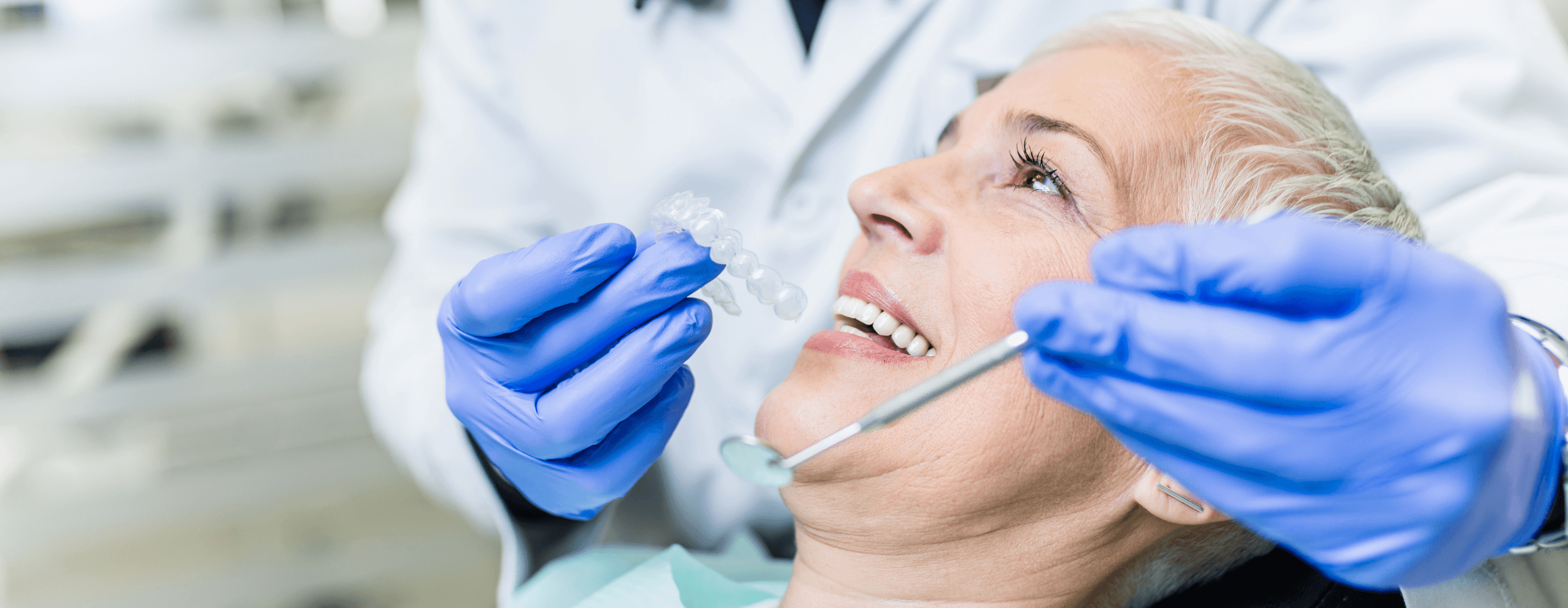
This isn’t the same as a pharmacy strip. A dentist takes impressions to create custom-fitted trays, then provides a professional-strength gel, still well above the over-the-counter limit, to use at home over roughly two to three weeks. The end result is broadly comparable to in-chair whitening; it simply takes longer to get there, with the colour shifting gradually rather than all at once.
Sensitivity tends to be milder with this option, since the gel concentration is generally a notch below in-chair strength and trays are custom-fitted to limit gum contact.
Comparing the Two Directly
A few things tend to drive the decision either way:
- Timeline: In-chair gives same-day results; take-home trays work over a couple of weeks
- Sensitivity: Take-home tends to be gentler, since it’s more gradual
- Convenience: In-chair needs one appointment; take-home fits around daily life with no chair time beyond the initial fitting
- Longevity: Both last broadly similarly with good care, often a year or more before a touch-up is needed, though this varies by individual habits like smoking and diet
- Cost: In-chair sits at the higher end of the price range; take-home is generally more affordable while still being a genuine professional treatment
What Neither Option Does
Whitening lifts surface and some internal discolouration from the natural tooth, but it doesn’t change the colour of existing fillings, crowns, or veneers. Anyone with visible dental work in the smile zone is usually better off discussing sequencing with a dentist first, since whitening natural teeth to the desired shade before updating visible restorations to match tends to give a more even result.
Is Whitening Right for You?
Both options work well for general yellowing and surface staining from coffee, tea, red wine, or smoking. A proper assessment beforehand checks for decay, gum health, and sensitivity before any whitening goes ahead, since whitening over an unaddressed issue can make things worse rather than better.
The right choice between in-chair and take-home really comes down to timeline, budget, and personal preference rather than one being objectively superior. Contact us today to book a consultation with High St Dental Care to find out which whitening option suits your smile and your schedule.